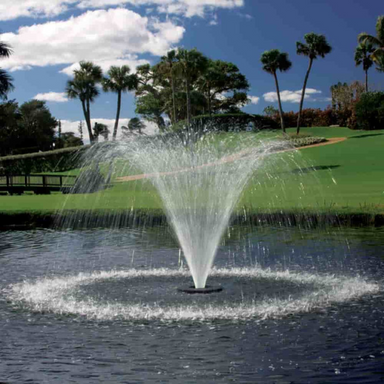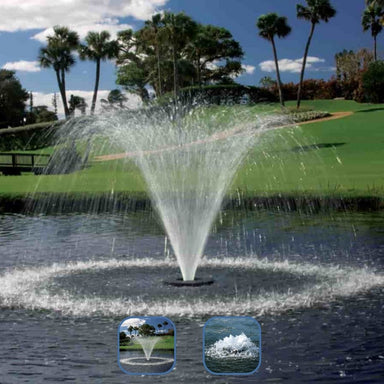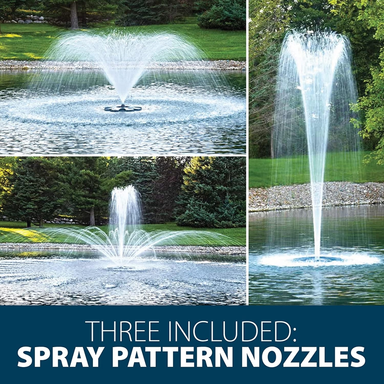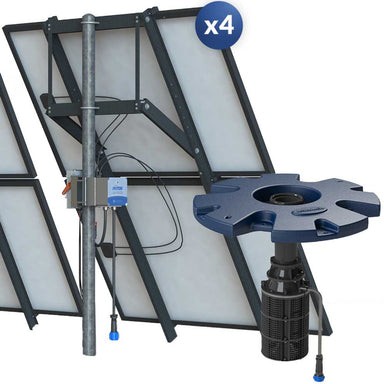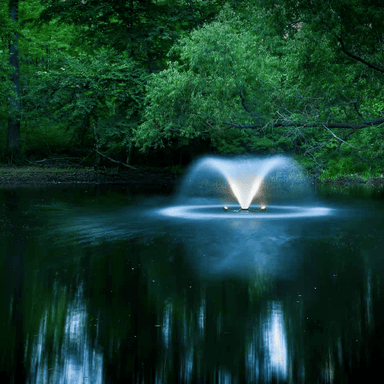

Introducing the Scott Aerator DA-20 Display Aerator: The Ultimate Pond Aeration Solution Going above and beyond mere pond aeration, the DA-20 e...
View full detailsFilters
Aerating Pond Fountains
Sale
Introducing the Scott Aerator DA-20 Display Aerator: The Ultimate Pond Aeration Solution Going above and beyond mere pond aeration, the DA-20 e...
View full details
Sale
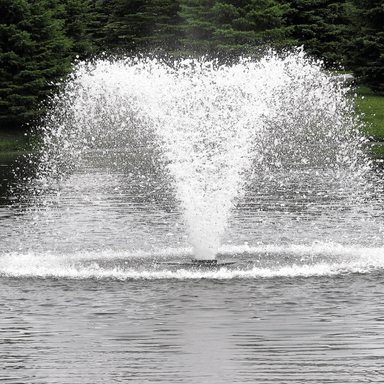
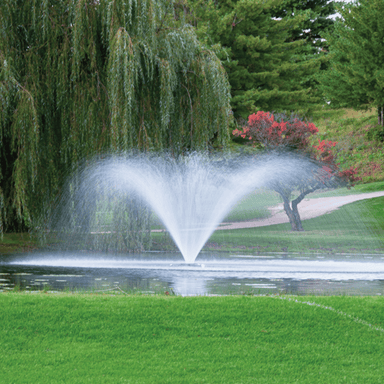
A True Masterpiece: The Kasco VFX Fountains The Kasco VFX Series Pond Fountain is a crossover of surface aerators and fountains, offering an e...
View full details
Sale
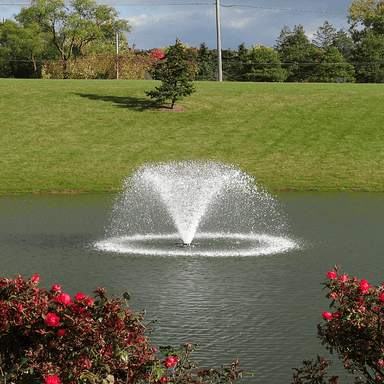
Experience The Fountain That Does It All: The Airmax EcoSeries Fountain How would you feel if your pond finally became the peaceful retreat yo...
View full details
Sale
Elevate Your Aquatic Environment With Vanguard Typhoon Display Aerator The Vanguard Typhoon Floating Display Aerator represents the pinnacle o...
View full details
Sale
Discover Pond Bliss: Embrace the Joy of Sparkling Waters with the Power House Aeration Fountain Introducing the alluring and energy-efficient ...
View full details
Sale
Aqua Control Evolution Aerating Fountain The Aqua Evolution Fountain with 1/2 HP power is the ideal solution for smaller water bodies spanning...
View full details
Sale
Rejuvenate Your Pond with the Scott Aerator North Star Fountain Aerator Enhance your pond or lake with the Scott Aerator North Star Aerating ...
View full details
Sale
Airmax Solar Fountain: Power Your Pond, Naturally. Tired of skyrocketing energy bills or struggling to bring power to your remote pond? Introd...
View full detailsMost people buy the wrong fountain.
They see a tall, dramatic spray pattern and assume it must be adding more oxygen than anything else. It makes sense. More water in the air should mean more aeration, right?
Not necessarily.
Some decorative fountains that throw water 10 feet into the air actually oxygenate less water than an aerating fountain with a much lower spray pattern. That's because real aeration isn't about how high the water shoots. It's about how much water is being moved, broken apart, and exposed to atmospheric oxygen.
If your goal is healthier fish, fewer algae blooms, less odor, and better overall pond health, understanding that difference can save you from buying the wrong system.
An aerating pond fountain is designed to move as much water as possible, not simply create the tallest spray pattern.
Unlike decorative fountains that rely on nozzles to create elaborate displays, aerating fountains use a propeller to move large volumes of water. That movement increases oxygen transfer at the surface while creating circulation throughout the upper portion of the pond.
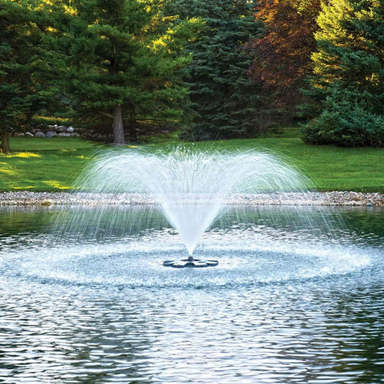
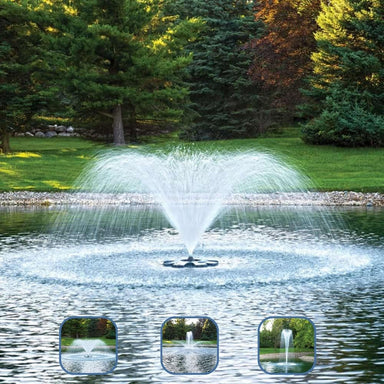
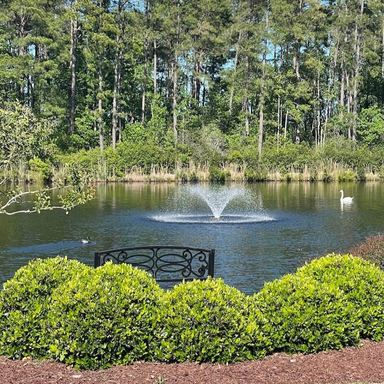
The result is a classic umbrella-shaped spray pattern.
It may not be the flashiest display, but it is one of the most effective ways to improve surface oxygen levels while still creating an attractive water feature.
When pond health is just as important as appearance, this is where a pond aerator and fountain becomes the better solution.
Most people don't start looking at pond aerator fountains because everything is going well.
They call when the fish are gasping near the surface after a hot night. When algae keeps coming back no matter what they try. When the pond starts smelling like sulfur or rotten eggs. When muck keeps building up around the shoreline.
By the time those problems become obvious, your pond has usually been struggling for quite a while.
An aerating fountain helps restore oxygen where the pond needs it most near the surface while creating the circulation that stagnant ponds often lack.
This is probably the biggest misconception in the entire pond industry.
Buyers naturally assume taller equals better.
But oxygen transfer comes from water movement and surface contact, not simply throwing water higher into the air.
A floating aerating fountain with a lower, fuller spray pattern often transfers significantly more oxygen than a decorative fountain with a dramatic vertical display because it moves far more water every minute.
That is why experienced pond managers pay attention to flow rate, engineering, and water turnover instead of judging a fountain by appearance alone.
The goal is healthier water, not just a taller fountain.
This is where most buyers get confused.
A decorative fountain is built to make the pond look beautiful.
An aerating fountain is designed to improve oxygen transfer and surface circulation while still creating an attractive display.
Bottom diffused aeration quietly oxygenates the entire pond from the bottom up with almost no visible spray at all.
None of these systems are "better."
They simply solve different problems.
If appearance and beauty are your priority, choose a decorative fountain.
If appearance and improved surface aeration both matter, choose a floating pond aerator fountain.
If your primary goal is improving the health of the entire water column, bottom diffused aeration is usually the better choice.
Many larger ponds benefit from combining both systems.
This is an important conversation we have almost every day.
If your pond is deeper than about 6 to 8 feet and your primary goal is pond health, surface aerators alone are usually not enough.
Below the upper layer of water, oxygen levels can continue dropping while muck, nutrients, and anaerobic bacteria build up on the pond floor.
An aerating fountain improves the upper portion of the pond.
A bottom diffused aeration system improves the entire water column.
Knowing the difference helps you invest in the right solution instead of hoping one product will solve every pond problem.
If your pond has heavy aquatic vegetation, recurring fish kills, or deeper oxygen problems, a surface fountain alone is usually not enough to restore long term pond health.
Not all pond fountains move water the same way.
Most decorative fountains use an impeller to push water through a nozzle and create beautiful spray patterns or cascading water displays. They are designed to maximize visual appeal, not oxygen transfer.
A true aerating pond fountain works differently. Instead of relying on a nozzle, it uses a propeller to move a much larger volume of water across the surface. That movement exposes more water to atmospheric oxygen, helping increase oxygen levels while creating stronger surface circulation.
If your goal is healthier fish, better water quality, and fewer algae problems, the amount of water being moved matters far more than how tall the spray reaches.
This is why experienced pond owners look beyond appearance. They compare flow rate, engineering, and long-term performance instead of assuming the tallest fountain provides the best aeration.
For ponds with recurring algae, low oxygen levels, or a history of fish kills, choosing a true aerating fountain can make a dramatic difference. If your pond is deeper than 6 to 8 feet or your primary goal is complete pond aeration throughout the entire water column, a bottom diffused aeration system is usually the better solution, or it can be paired with an aerating fountain for the best overall results.
Choosing the right system depends on your pond's depth, size, fish population, water quality, and goals.
There isn't a one-size-fits-all answer.
If you're not sure which direction to go, give us a call at 866-383-7258. Our pond experts will help you determine whether an aerating fountain, bottom diffused aeration, or a combination of both is the right fit for your pond.
Our goal is simple: help you buy the right system the first time.
Yes, but not all fountains aerate equally. Decorative fountains improve oxygen transfer near the surface, while true aerating fountains are specifically engineered to move much larger volumes of water for better surface aeration. If your goal is healthier water instead of just appearance, an aerating fountain is usually the better choice. Deep ponds may still require bottom diffused aeration for complete oxygen circulation.
It depends on which type of fountain you're talking about. Decorative fountains are designed primarily for appearance and provide only limited aeration. A true pond fountain aerator is engineered specifically to improve oxygen transfer and circulation near the surface. Bottom diffused aeration remains the best option when your goal is oxygenating the entire pond.
Fish often respond first. Many pond owners notice fish spreading back through the pond instead of crowding the surface within a few days. Odor usually improves next, while algae control and overall water clarity often take several weeks as the pond begins rebalancing naturally. Results depend on pond size, existing water quality, and whether additional aeration is needed.
Aerating fountains work well on many ponds, but once ponds reach roughly 6 to 8 feet deep, they are no longer the best standalone solution if your primary goal is aeration. Surface fountains mainly improve the upper portion of the pond. Deeper ponds usually benefit from bottom diffused aeration that oxygenates the entire water column from the pond floor upward.
If you want an attractive fountain while improving surface circulation and oxygen transfer, an aerating fountain is an excellent choice. If your primary concern is fish health, heavy muck, recurring algae, or improving the entire pond ecosystem, bottom diffused aeration is usually the better investment. Many larger ponds achieve the best results by using both systems together.